
Why Lightweight Materials Matter in Modern Drone Design
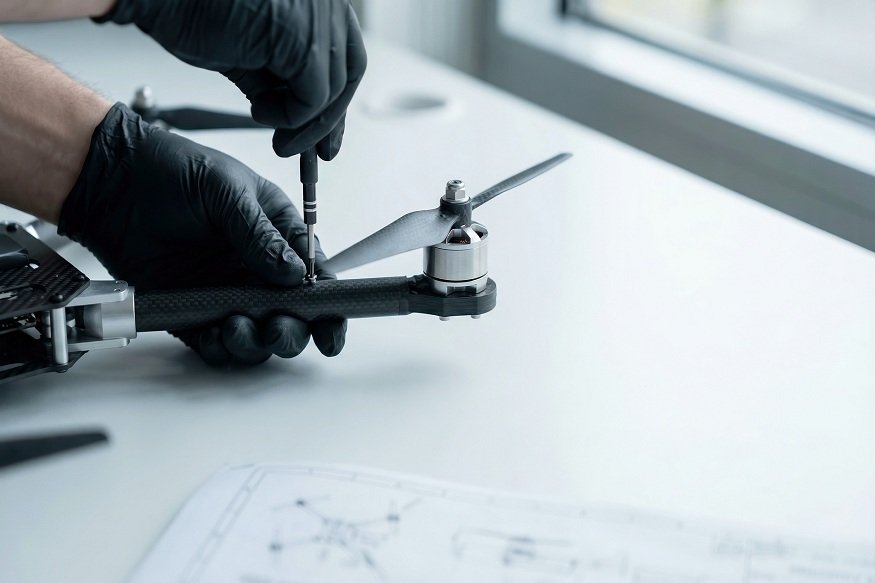
Weight kills drone performance. A heavy drone burns through batteries, struggles to maneuver, and carries less equipment. A light drone does everything better. This brutal reality drives engineers to obsess over every single gram. The payoff? Drones that fly hours instead of minutes. Machines that zip through obstacle courses. Platforms that haul serious cargo across long distances.
Revolutionary Materials Transform Possibilities
Carbon fiber started the lightweight movement. This material is stronger than steel and lighter than aluminum. Its stiffness prevents flexing. Early drones used wood and foam. Then aluminum took over. Now? Carbon fiber dominates performance designs. A carbon fiber arm can survive crashes that would pretzel aluminum. Materials science went nuts after carbon fiber proved its worth. Companies made plastics as strong as aluminum but way lighter. Kevlar makes things strong but not heavy. Foam cores make super-strong, lightweight structures. Some teams even play around with bamboo and other natural fibers.
Read More: What Procurement Teams Should Know Before Sourcing Hot Rolled Coils
3D printing cracked open design possibilities. Weird organic shapes that put material only where stress concentrates. Hollow sections connected by thin webs. Internal geometries impossible to machine conventionally. Computers calculate optimal structures, removing every unnecessary milligram. The results look alien but fly beautifully. Heat management pushed development too. Electronics run hot. Motors get scorching. Old drones used metal heat sinks. Heavy chunks of aluminum or copper. Now? Ceramic composites dissipate heat while weighing next to nothing. Graphene coatings spread heat across larger surfaces. Phase change materials absorb temperature spikes without adding bulk.
Components Where Weight Reduction Shines
Cars have lost a ton of weight lately. Neodymium magnets offer greater magnetic force relative to their weight. Solid shafts were substituted with hollow ones. Aluminum windings substituted for copper where feasible. A modern motor produces twice the thrust of older designs while weighing less.
UAV propellers showcase materials innovation brilliantly. Companies like Aerodine Composites distinguish themselves by creating carbon fiber blades that offer impressive stiffness without the heavy drawbacks of previous designs. With their propellers, drones can stretch battery time longer.
Frames evolved from simple tubes to engineered structures. Monocoque designs use the shell for strength instead of internal supports. They fold using neat geometric designs, ditching the need for heavy hinges. Some frames combine multiple functions, like arms that double as landing gear.
Batteries remain problematic. Energy density improves slowly. Really slowly. So engineers get creative. They shape batteries to fit inside frame cavities. They balance cells precisely to avoid carrying excess capacity. Some test drones use solar panels to help their batteries last longer while flying.
The Performance Payoff
Light drones simply perform better. They launch quicker. Climb faster. Stop shorter. Turn tighter. Photography drones hold position steadier because motors aren’t struggling. Inspection drones squeeze through tighter spaces. Mapping drones cover more territory per flight. Crashes cause less damage too. Kinetic energy equals mass times velocity squared. Reduce mass, reduce impact force. Lighter drones bounce off obstacles that would shatter heavy ones. Props survive strikes that would snap them on overweight machines. Repair bills shrink. Downtime decreases. Transportation is also getting an upgrade. Operators carry more drones in the same cases. Hikers pack drones deeper into wilderness areas. Emergency responders deploy faster without heavy equipment slowing them down.
Read More: How Online Platforms Are Changing the Way People Discover Hidden Treasures
Conclusion
Weight reduction remains the holy grail of drone design. Every materials breakthrough enables new missions. Delivery distances extend. Flight times stretch. Payload capacities grow. With each new generation of drones pushing boundaries, the cycle continues. Engineers’ ability to create remarkably strong and lightweight machinery has transformed yesterday’s impossibilities into today’s standard features. The future will be shaped by the most lightweight drones capable of performing their duties.